

MiniSeal High-Performance Crimp Splices




MiniSeal High-Performance Crimp Splices
Applications
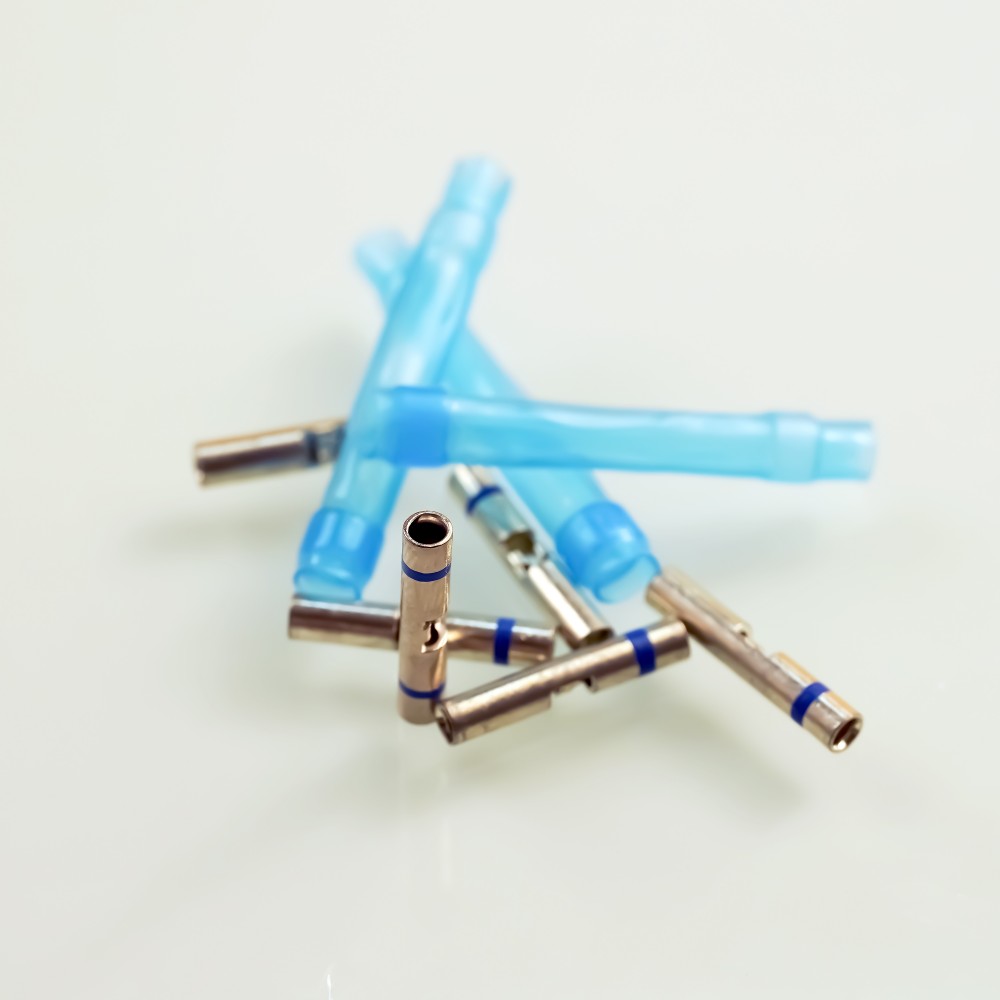
High-performance crimp splices deliver long-term electrical integrity and environmental sealing in the most challenging aerospace and defense applications. Each splice combines a plated copper crimp barrel, a melt-flow insert, and a transparent heat-shrink sleeve that shrinks around the joint to lock out hydraulic oils, jet fuel, lubricants, and moisture while providing built-in strain relief. Three purpose-built series—parallel (stub), in-line (butt), and a 200 °C high-temperature variant—give engineers the flexibility to match space, routing, and thermal requirements without sacrificing reliability or weight.
Series Overview
• Stub (parallel) splice: multiple conductors enter from one side; ideal for sensor pigtails, jumper leads, and branch connections in tight spaces.
• Butt (in-line) splice: conductors enter from opposite sides for end-to-end repairs while maintaining harness profile and routing.
• High-temperature butt splice: engineered for continuous operation up to 200 °C in engine bays and other extreme-temperature zones.
Characteristics
• Ultra-compact, lightweight construction minimize sharness size and mass
• One-step crimp-and-heat process speeds installation and lowers overall cost
• Immersion-resistant seal prevents liquid ingress and subsequent corrosion
• Transparent sleeve enables instant visual inspection of the crimp joint
• Integrated strain relief withstands vibration and mechanical stress across aircraft, rotorcraft, and defense platforms
Notes:
• Select the splice style—stub, butt, or high-temperature butt—based on circuit layout and service temperature.
• Choose barrel plating: tin for tin or silver-plated conductors; nickel for nickel-plated conductors or applications above 150 °C.
• Calculate total wire cross-section (CMA or mm²) and use color coding to pick the correct barrel size.
• Verify that each wire’s insulation fits the sealing-sleeve openings; place no more than two wires in any sleeve hole to maintain seal integrity.
• Detailed sizing tables, CMA worksheets, and part-number references are available from our technical support team.
ADDRESS Email:supply@hzdingyuan.cn 
|